Landmarks
A royal monument, a Chinese-style clock tower, the country's first public library, and a lake at the centre of it all.
The Royal Monument to King Vajiravudh
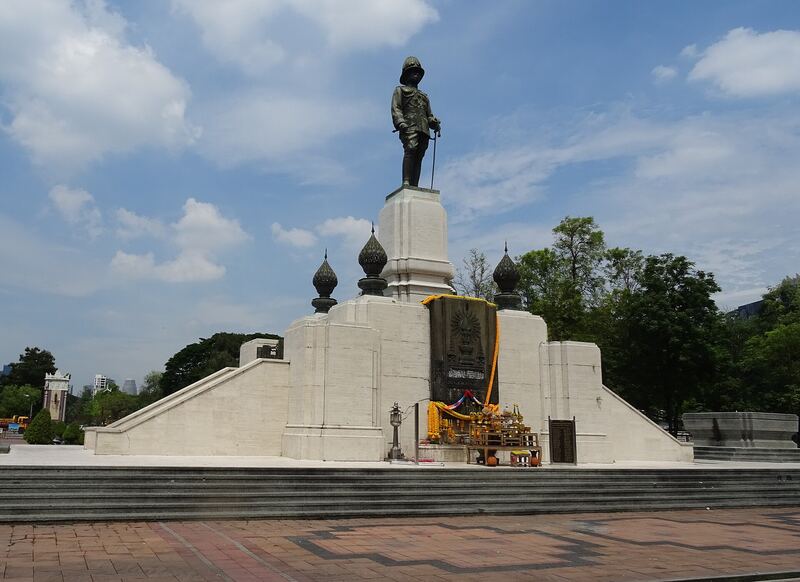
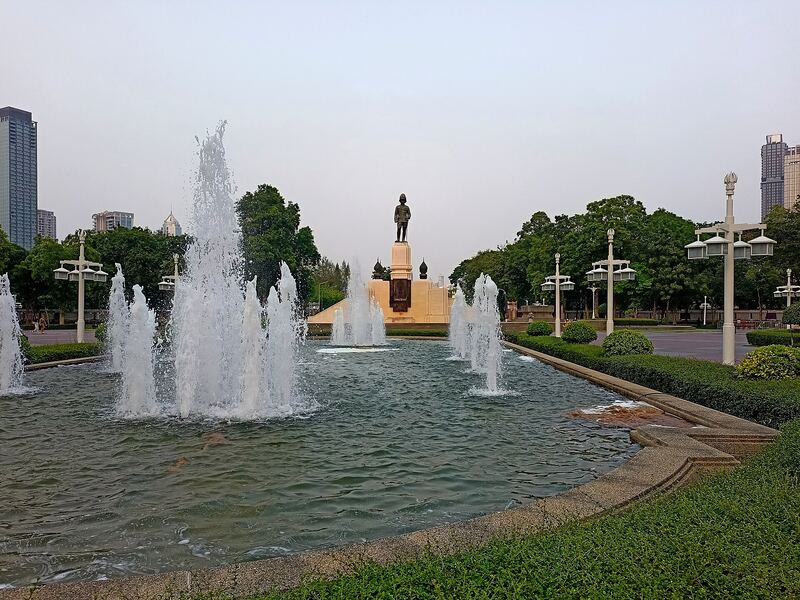
At the south-western entrance, where Rama IV Road meets Ratchadamri Road, stands the bronze monument to King Vajiravudh (Rama VI), who gave the park to the nation. It was sculpted by Silpa Bhirasri, the Italian-born artist regarded as the father of modern Thai art, and unveiled in 1942. The King is shown standing, larger than life, on a high white base facing the city.
The monument is a place of genuine reverence. Visitors bring garlands and flowers, and many people pause to pay respect as they pass. Please behave as you would at any place of honour: do not climb the base, sit on the steps or pose in jest.
The clock tower
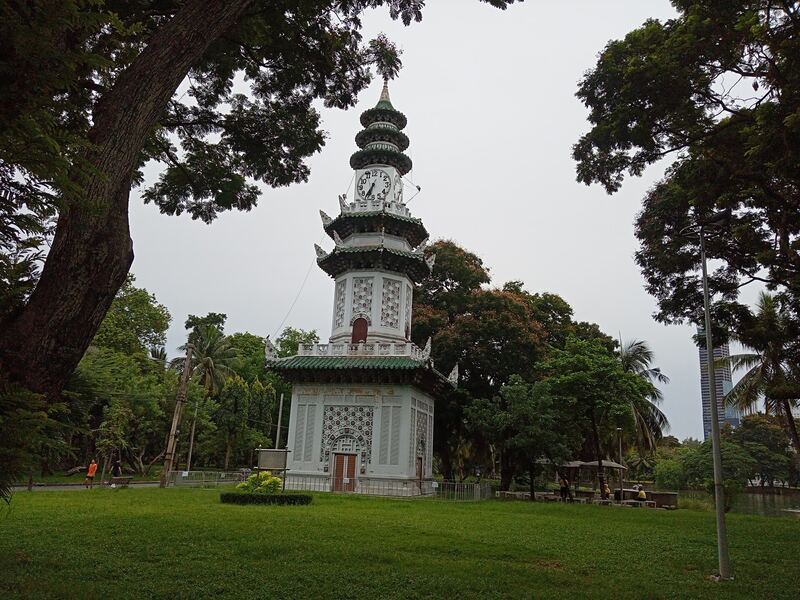
The clock tower, built in 1925, is the oldest structure in the park. Its tiered form follows Chinese architecture, and it stands among the trees near the south-eastern gate.
The library
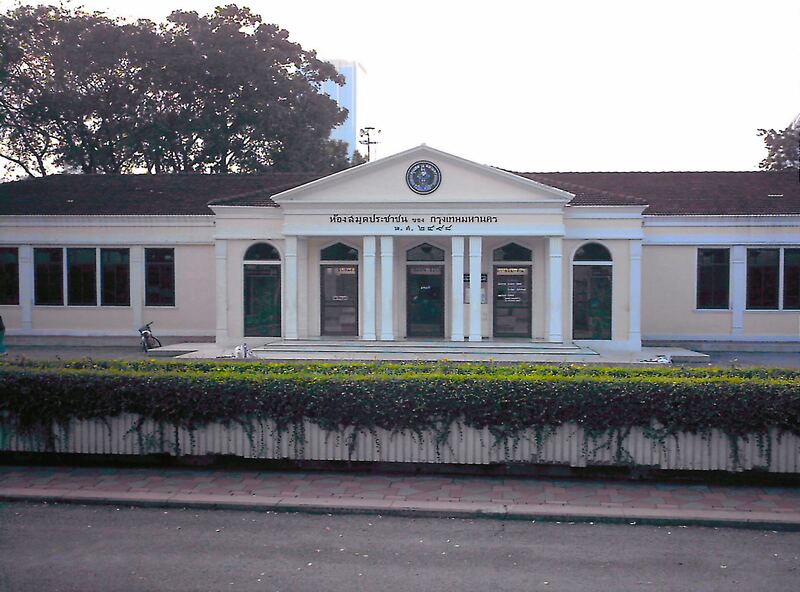
This neoclassical building housed the first public library in the country. It still serves as a public library and reading room, open from Tuesday to Sunday.
Lumphini Hall
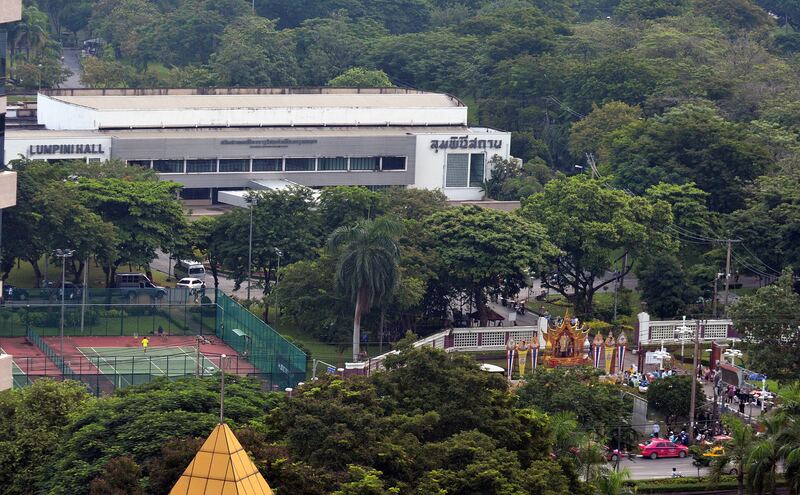
Opened in 1953 as a ballroom, Lumphini Hall (ลุมพินีสถาน) became famous for the Suntharaphon orchestra, founded by the composer Eua Sunthornsanan, which played here weekly for many years. The hall has been restored for the park's centenary and is again used for dance.
The lake
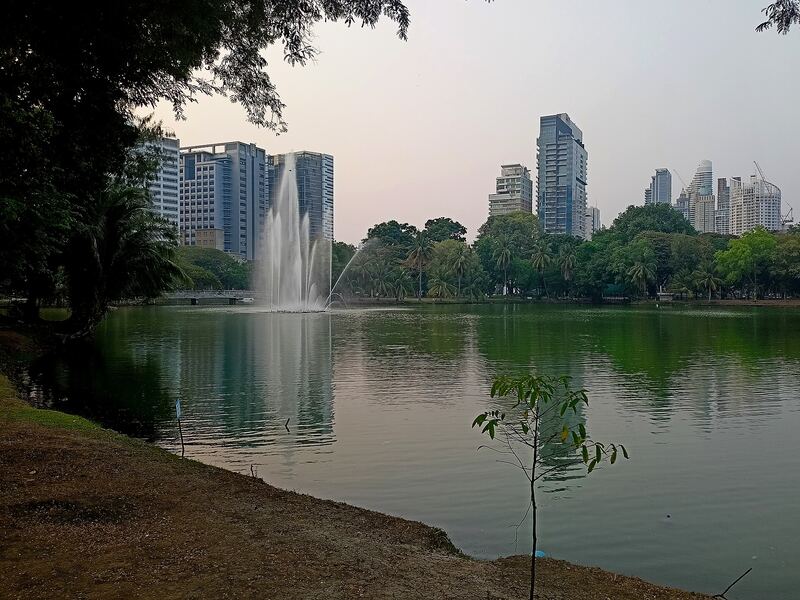
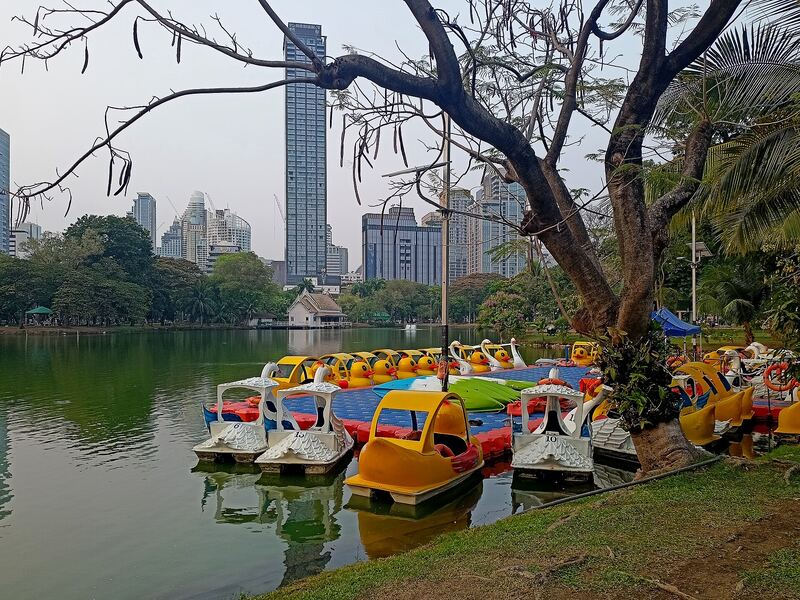
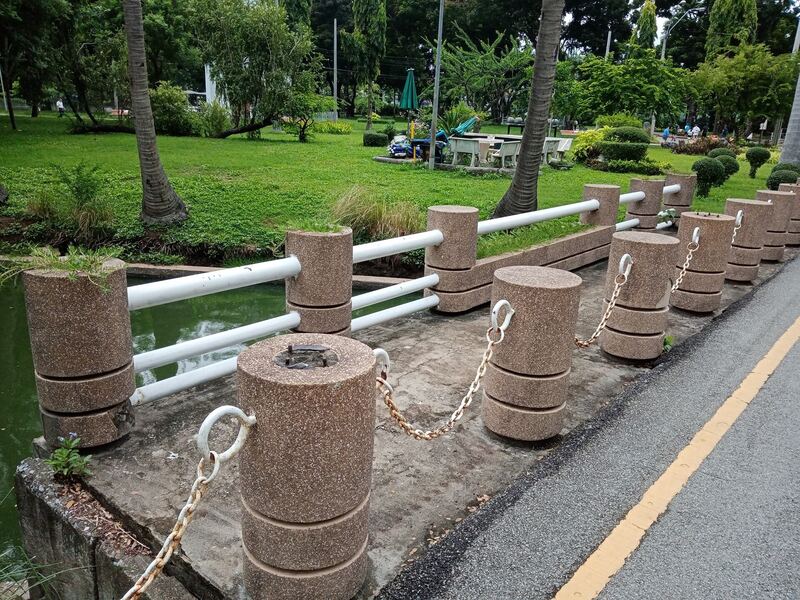
The large artificial lake, with its island, was dug when the park was first laid out. Today you can rent paddle boats, many shaped like swans, and watch water monitors cruising slowly past. Small bridges cross the inlets, and the tall rain trees along the shore give shade in the hottest part of the day.


The Chaipattana Aerator monument
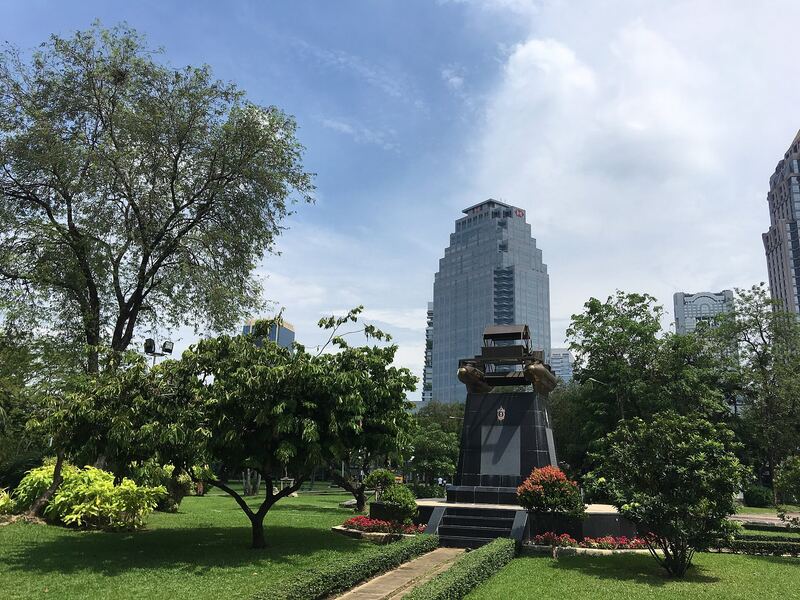
A monument in the park honours the Chaipattana Aerator, a floating paddlewheel that puts oxygen back into polluted water. It was developed under the initiative of His Majesty King Bhumibol Adulyadej (Rama IX) and patented in 1993, which made it the first patent granted to a reigning monarch. In Thailand, 2 February, the date of that patent, is celebrated as Inventors' Day.
Pavilions and paths
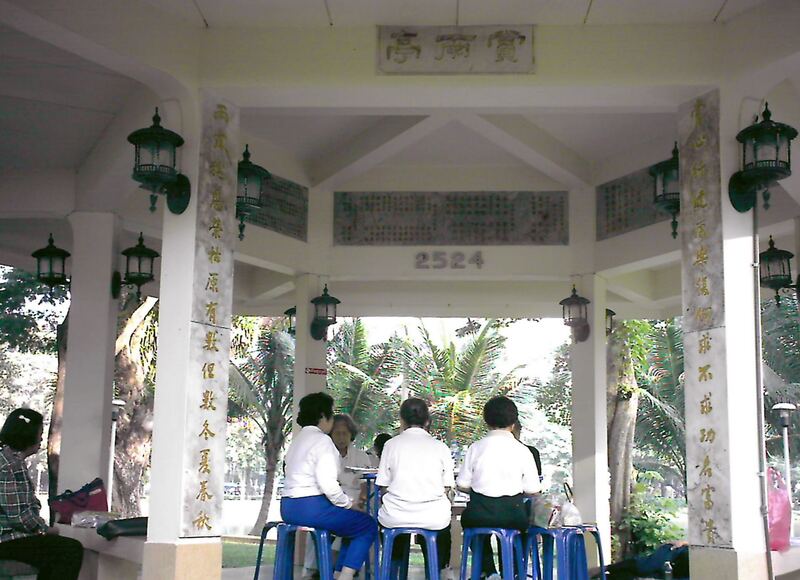
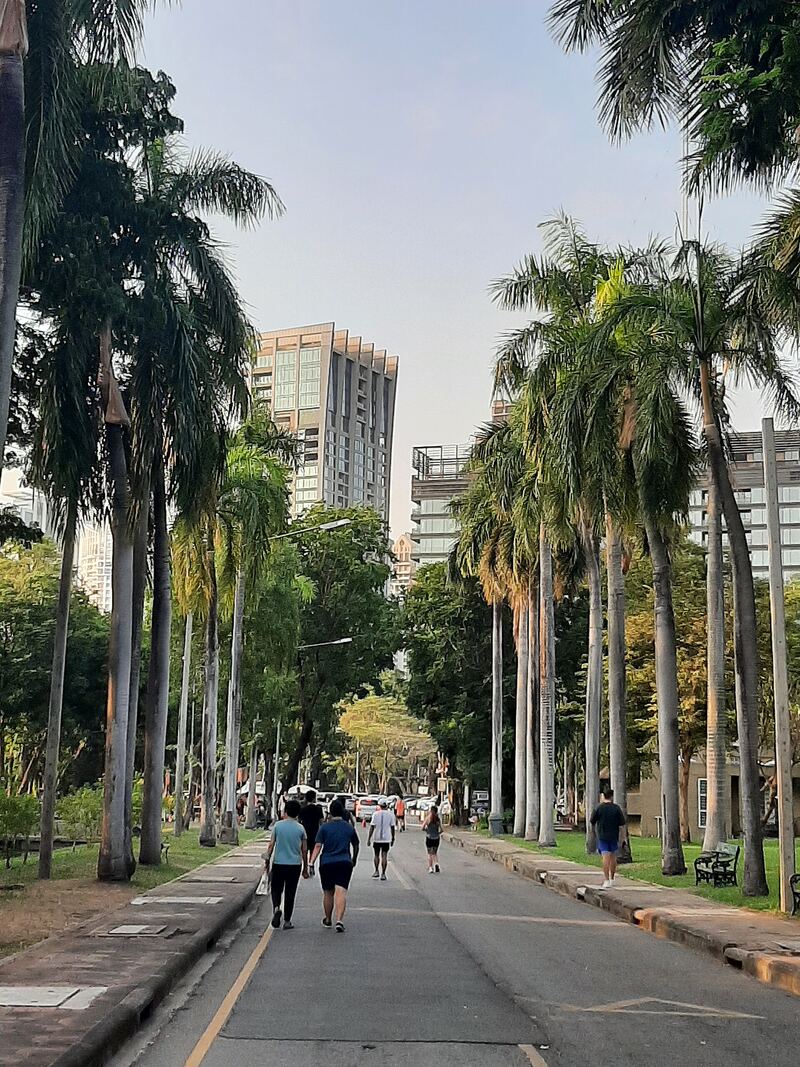
Open pavilions around the park give shelter from sun and sudden rain, and the paved circuit of about 2.5 kilometres is one of the most popular running routes in Bangkok. In the early morning the pavilions fill with tai chi groups, chess players and friends meeting before work.